
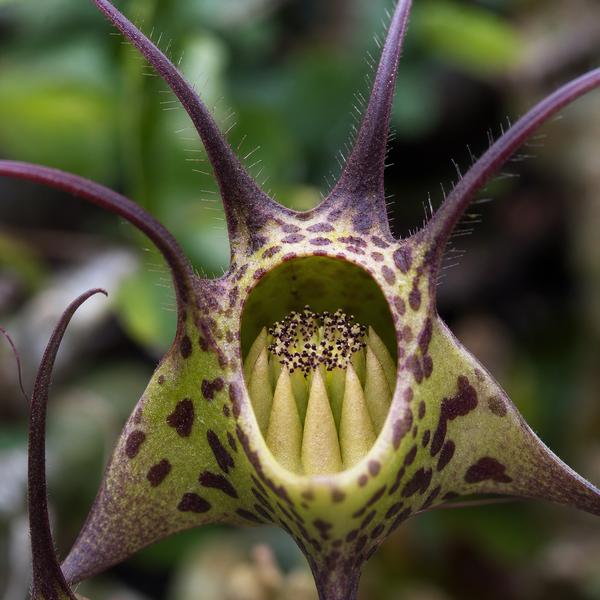
 1. Titan Arum (Indonesia): Titan Arum or the Corpse Flower is one of the world’s largest and rarest flowering structures. Known for the pungent smell it emits – similar to a decomposing mammal – the flower attracts carrion-eating beetles and flesh flies that pollinate it.
2. Rafflesia Arnoldii (Indonesia): Known as the “corpse flower” as well, Rafflesia Arnoldii is famous for producing the largest individual flower in the world. It emits a foul odor, similar to that of rotting meat, to attract insects for pollination.
3. Hydnora Africana (Southern Africa): An unusual plant that grows almost entirely underground, Hydnora Africana is a parasite that attaches itself to the roots of other plants. It’s famous for its flower that resembles a sea creature and emits a smell of dung to attract beetle pollinators.
4. Amorphophallus (Worldwide): Commonly called Voodoo Lily, this plant produces a single, gigantic leaf, which provides energy for the large inflorescence the next season. The flower structure can be pretty weird too, with a tall spadix enclosed by a spathe- a large, showy, modified leaf.
5. Victoria Amazonica (Amazon River Basin): As the largest water lily in the world, the Victoria Amazonica has leaves that can reach up to three meters in diameter, strong enough to support the weight of a small child. Its flowers are white the first night they open and become pink the next day.
6. Dragon Blood Tree (Yemen): Found exclusively in Socotra, Yemen, this ancient and unusual tree gets its name because it has red sap, which looks like the blood of a dragon. Its upturned canopy provides shade and reduces evaporation, which is valuable in the desert environment.
7. Welwitschia (Namibia): This plant found in the arid regions of Namibia is a wonder of adaptation. With only two leaves, a stem base, and roots, it can survive for a thousand years or more.
8. Wollemi Pine (Australia): Often referred to as a “living fossil,” its wild population was discovered only in 1994, hidden in a temperate rainforest wilderness area of the Wollemi National Park in New South Wales, Australia.
9. Ghost Plant (Mexico): Scientifically known as Monotropa Uniflora, the ghost plant lacks chlorophyll, hence, is unable to photosynthesize. It appears translucent white and survives by feeding on fungi that draw nutrients from trees.
10. Strangler Fig (Tropical Forests): This plant begins life as a tiny seedling, high on the branches of another tree, and sends roots down toward the ground. Over time, these roots envelop the host tree, strangling it in the process.
