
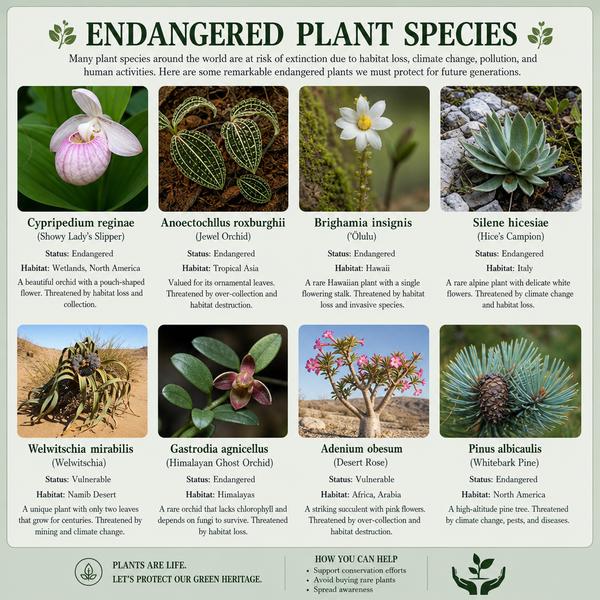
 Endangered plants are species that are at the brink of extinction because of various factors such as habitat loss, pollution, climate change, over-harvesting, and invasive species. Some notable endangered plants include the Venus Flytrap, Western Prairie Fringed Orchid, the Eastern Prairie Fringed Orchid, and Ghost Orchid, among others.
1. The Venus Flytrap: This carnivorous plant is well-known for its complex method of capturing its prey. It is native to North and South Carolina in the US, but because of habitat destruction and illegal harvesting, it has been listed as ‘Vulnerable’ by the International Union for Conservation of Nature (IUCN).
2. Western Prairie Fringed Orchid: Once found across North America, this plant species has lost most of its habitat to agriculture. It is now found in only a handful of US states and Canadian provinces and is listed as ‘Threatened’ in the US.
3. The Eastern Prairie Fringed Orchid: This plant species is now found only in a few states across the northeastern US. Like the Western Prairie Fringed Orchid, it has lost most of its habitat to agriculture.
4. Ghost Orchid: Known for its stunning appearance, this plant species has encountered drastic population decreases due to habitat loss and poaching.
Conservation efforts for endangered plants, in general, involve a range of strategies including habitat protection, policy-making, reintroduction programs, and raising public awareness about the issue.
1. Habitat Protection: Efforts are being made to conserve the remaining natural habitats of these plants. This might involve buying the land, or protection through legislation. For instance, Venus Flytraps are protected in North Carolina, and it is illegal to remove the plant from its natural setting.
2. Reintroduction Programs: Seeds or young plants are often cultivated in a controlled, safe environment, like a greenhouse or nursery, and then reintroduced into their native habitats. An example of this is the Chicago Botanic Garden’s efforts to revive the Eastern Prairie Fringed Orchid.
3. Policy-making: Governments are implementing strict regulations against the illegal trade of endangered plants. Penalties and fines are being imposed to deter such practices.
4. Public Awareness: To ensure long-term conservation success, awareness is crucial. Various organizations run campaigns to inform and educate the public about the importance of plant conservation and how anyone can help.
In conclusion, the conservation of endangered plants requires the collective effort of governments, conservation organizations, and individuals. These steps will not only help in preserving biodiversity but also keeping our ecosystem healthy and resilient.
